

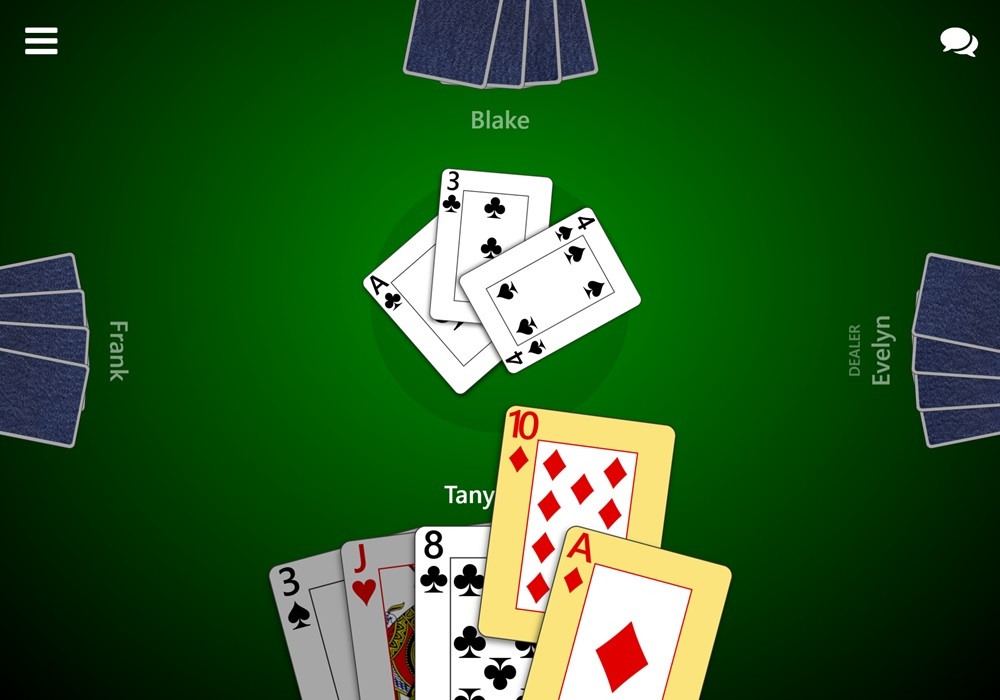
Card games have served as a primary vehicle for human socialization for centuries. Whether sitting around a kitchen table for a casual game of poker, gathering in a community center for a bridge tournament, or trading physical cards on a school playground, the experience has fundamentally relied on the presence of others. When card games first migrated to computers in the late twentieth century, this vital social component was largely stripped away. Early digital card games relied on rudimentary artificial intelligence opponents, offering a solitary and predictable experience that quickly grew repetitive.
The integration of live multiplayer features has fundamentally transformed the digital card gaming landscape. By leveraging real-time data transmission, cloud infrastructure, and interactive communication tools, modern platforms have successfully replicated the psychological and social dynamics of tabletop gaming. This shift from isolated gameplay to a connected, live multiplayer ecosystem has profoundly influenced player retention, community formation, strategic depth, and the overall commercial viability of the genre.
Restoring the Psychological Nuance of Human Opponents
The most significant consequence of live multiplayer mechanics is the introduction of genuine human unpredictability. While an artificial intelligence opponent operates within pre-programmed algorithmic boundaries, human players bring a complex mix of emotion, varying skill levels, and psychological volatility to the digital table.
In games like poker, blackjack, or customizable trading card games, the strategy is rarely limited to the mathematical value of the cards in hand. A major component of the game involves reading the opponent, analyzing patterns, and exploiting behavioral weaknesses. Live multiplayer features allow these psychological dynamics to thrive in a digital environment.
Players can experience the tension of a high-stakes bluff, notice an opponent hesitation through turn-timing data, or exploit a pattern of aggressive wagering. This psychological depth creates an entirely different gameplay loop than playing against a computer. Every match feels distinct because the human variable changes with every connection, drastically increasing the replay value of the game.
Social Infrastructure and Community Construction
Traditional card games survived for generations precisely because they acted as social hubs. Live multiplayer features systematically rebuild this social infrastructure through digital means, converting passive applications into active social networks.
Integrated Text and Voice Communication
Modern online card platforms utilize low-latency chat overlays and voice communication features. Players are no longer competing against faceless avatars; they can chat, joke, and commiserate in real time. This communication capability transforms a standard competitive match into a shared social space. Over time, casual interactions blossom into digital friendships, prompting players to return to a specific platform not just for the mechanics of the card game, but to catch up with their regular gaming circle.
Guilds, Clubs, and Team Ecosystems
To deepen these social bonds, developers implement formalized community structures directly into the game clients. These include features such as:
-
User-created poker clubs with customizable blind structures and private lobbies.
-
Trading card game guilds where members can share deck lists and practice strategies.
-
Team-based leaderboards that aggregate the scores of multiple players to unlock collective rewards.
By shifting the player identity from an isolated individual to a contributing member of a larger group, platforms leverage social accountability to drive long-term engagement and platform loyalty.
Elevating Strategic Depth and the Global Meta
When a card game is played in isolation or within a small local group, the strategy tends to stagnate. Live multiplayer components connect millions of players globally, accelerating the evolution of strategy and creating a dynamic concept known as the meta game.
The meta game refers to the highest level of strategy currently dominating a competitive environment. In multiplayer card games, whenever a player develops a highly efficient deck configuration or betting strategy, their opponents encounter it in real time. This exposure forces the community to analyze the new strategy and develop counter-tactics.
Because this information flows instantly across global servers, the strategic landscape shifts on a weekly or even daily basis. This constant evolutionary cycle demands that players remain intellectually engaged, continuously adjusting their approaches and learning new techniques to maintain their competitive edge.
The Rise of Competitive Matchmaking and Ranked Ladders
To maintain engagement across a diverse player base, live multiplayer platforms rely heavily on sophisticated matchmaking algorithms. In a traditional setting, finding opponents of an identical skill level can be challenging, often leading to lopsided games that frustrate beginners or bore experts.
Digital matchmaking engines solve this by assigning players a hidden or public skill rating based on their historical performance. When a user queues for a live multiplayer match, the system pairs them with an opponent of a similar caliber within seconds.
Furthermore, the introduction of seasonal ranked ladders provides a powerful long-term progression framework. Climbing from a bronze tier to a diamond or master tier gives players a quantifiable sense of achievement and status. The desire to achieve a higher rank before the competitive season closes serves as a reliable psychological driver, keeping players committed to a regular schedule of competitive play.
Real-Time Spectatorship and the Streaming Ecosystem
Live multiplayer features do not merely impact the individuals actively holding the digital cards; they have expanded the boundaries of the game to include a massive audience of spectators. The standardization of real-time data broadcasting has allowed online card games to integrate seamlessly with global streaming platforms.
Spectators can watch high-level players compete in real time, viewing the exact cards in hand through specialized user interfaces that protect game security while revealing hidden information to the audience. This spectator dynamic creates a powerful secondary layer of engagement.
Casual players watch streams to learn advanced strategies, analyze deck builds, and interact with charismatic community figures. This media consumption directly feeds back into the game ecosystem, as viewers routinely log back into the client immediately after a stream to test out the tactics they just witnessed, creating a continuous loop of participation.
Frequently Asked Questions
How do online card games prevent cheating in a live multiplayer environment?
Platforms protect game integrity by processing all critical logic on secure, centralized servers rather than on the player’s local device. This architecture prevents users from manipulating the game code to view hidden cards or alter deck compositions. Additionally, advanced anti-cheat systems monitor data transmission for anomalies and use algorithmic pattern recognition to flag potential collusion between players sitting at the same virtual table.
What happens if a player intentionally disconnects during a live match to avoid losing?
To maintain fairness, multiplayer card games implement strict disconnection protocols. If a player loses their connection or closes the application during an active game, a brief reconnection timer triggers, giving them an opportunity to rejoin the match. If the timer expires without a reconnection, the system automatically forfeits the game for that player, penalizing their rank and protecting the opponent from a stalled session.
How do matchmaking systems handle groups of players with vastly different skill levels?
When players of differing skill levels form a group to enter a multiplayer queue, the matchmaking engine typically utilizes a weighted average or prioritizes the rating of the highest-skilled member of the party. This structural safeguard prevents highly experienced players from intentionally grouping with novices to enter lower-tier lobbies and dominate inexperienced opponents.
Why do some online card games introduce asynchronous multiplayer modes?
Asynchronous multiplayer, where players take their turns at different times over hours or days rather than simultaneously, caters to audiences who desire strategic gameplay but cannot commit to an uninterrupted block of live time. This format expands the platform’s reach by accommodating casual schedules while maintaining the core appeal of competing against genuine human intelligence.
What is the purpose of automated emotes and quick-chat features in multiplayer lobbies?
Automated expressions and pre-set phrases serve two primary functions. First, they lower the language barrier, allowing players from completely different parts of the world to communicate basic intent and sportsmanship instantly. Second, they act as a natural toxicity filter, giving players a way to express emotion without allowing the abusive or disruptive text communication that can sometimes occur in unmoderated open chats.
How do developers keep the global meta game from becoming permanently stale?
When a specific card strategy or deck type becomes overly dominant and stalls the evolutionary cycle of the meta, developers intervene through balance updates. By subtly adjusting the resource costs, power levels, or specific rules governing problematic cards, they alter the mathematical efficiency of the dominant strategy, forcing the global community to discover entirely new tactical combinations.
Do live multiplayer features increase the data usage or hardware requirements for mobile players?
While live multiplayer features require a continuous, low-latency internet connection, the actual data payload transferred during a card game is remarkably small. Because the system only needs to transmit coordinate inputs, numerical values, and state changes rather than heavy visual assets, the game can run efficiently even on modest cellular connections without consuming massive amounts of monthly data.
